
You might be familiar with the word “dissociation.” (Please note, it is not “dis-association”).
Dissociation:

Association:
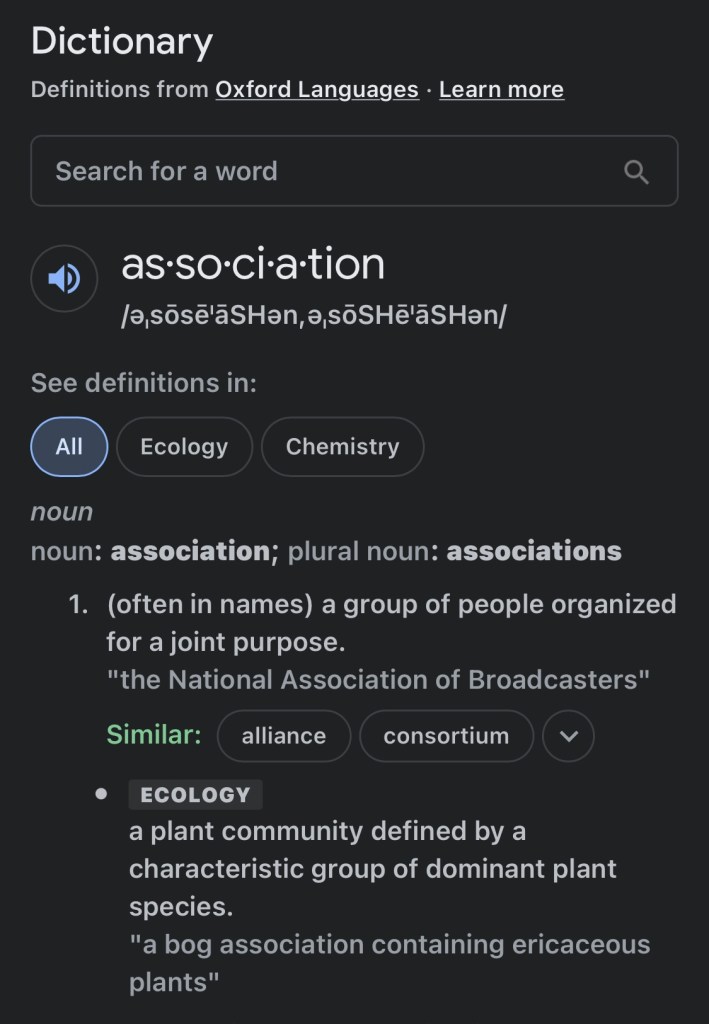
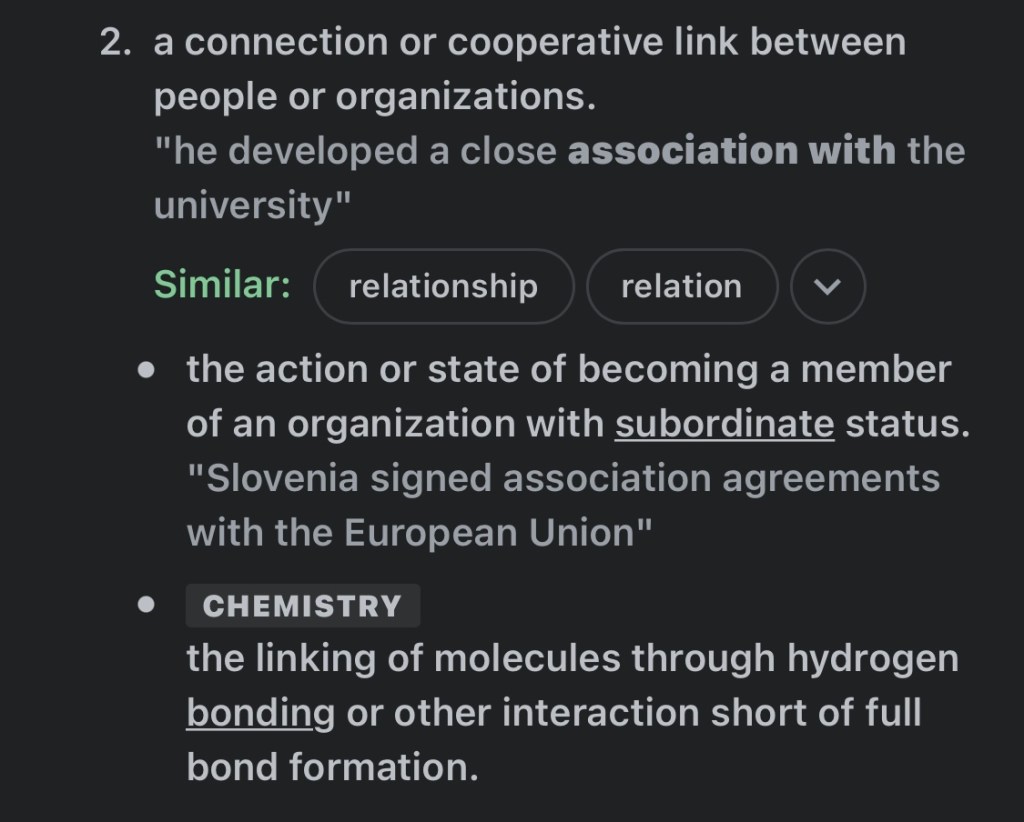
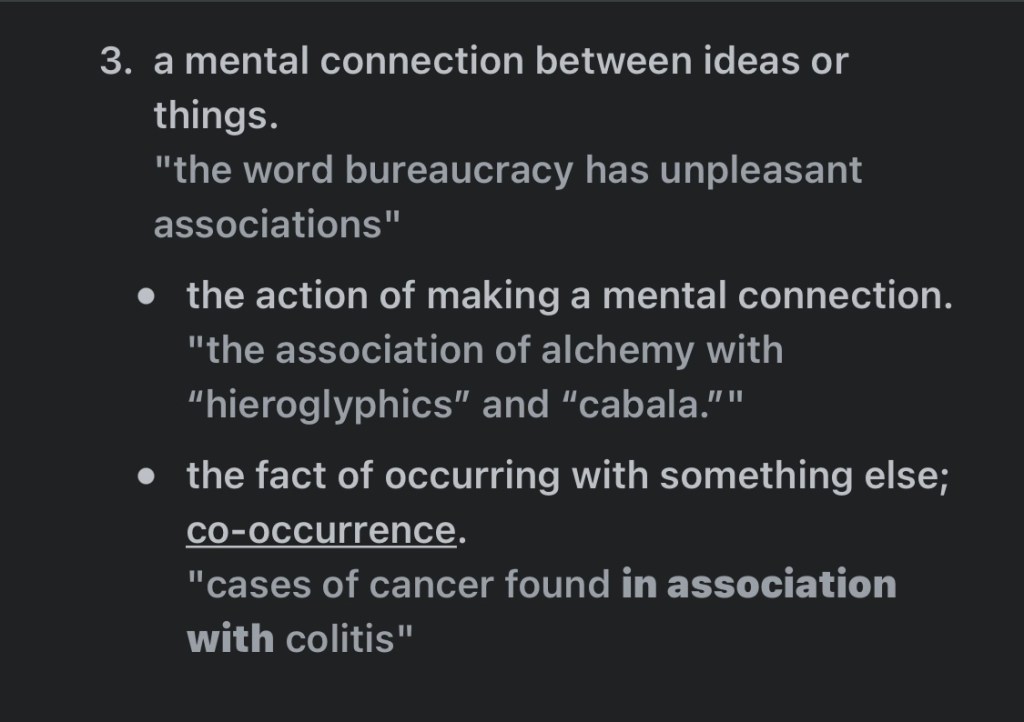
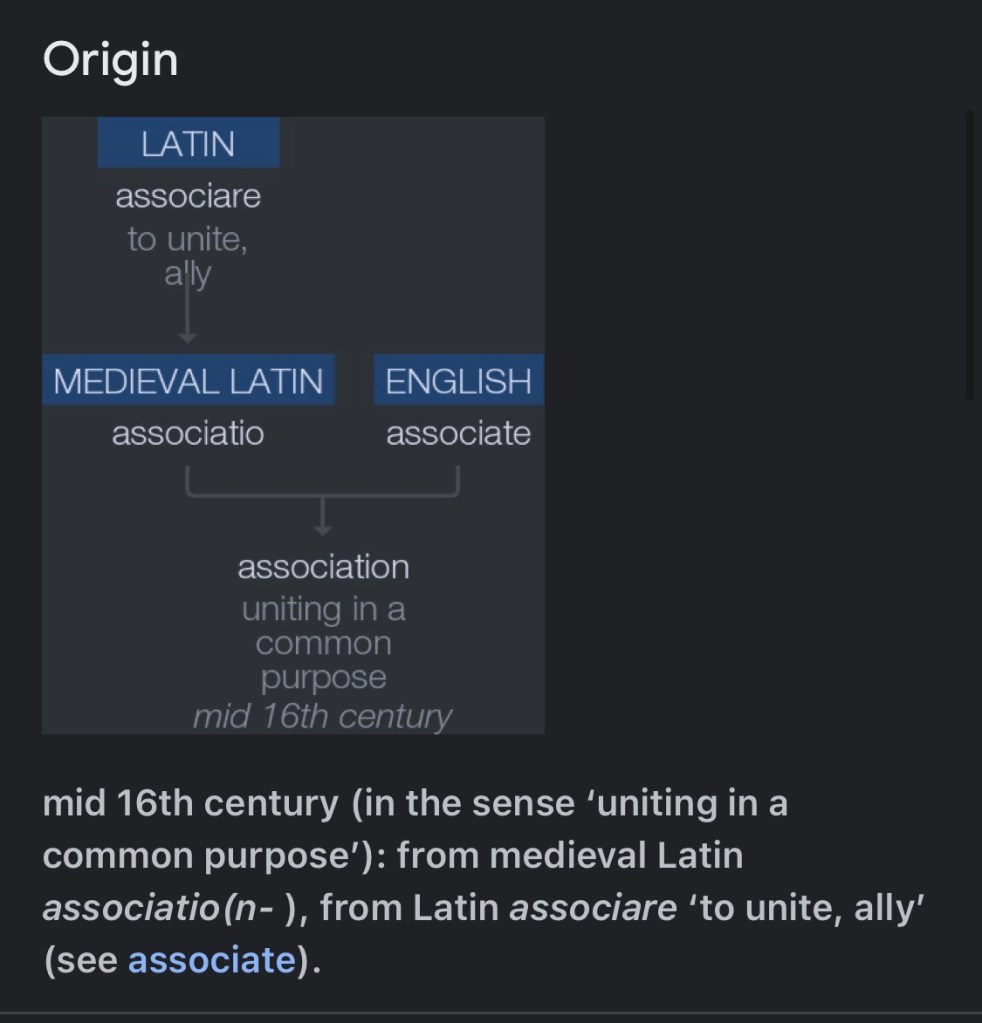
Considering these definitions, I then consider the word “dissociation” as compared to “dis-association”. Here are my thoughts:
“Dis-association” implies a lack of association. Here is where the discrepancy lies. I do not think that the experience of dissociation is simply a lack of those definitions of association. I agree that dissociation involves a sort of missing of association, yea. But I believe it is more than that.
The definitions of association imply a coherence between the things referenced as associated.
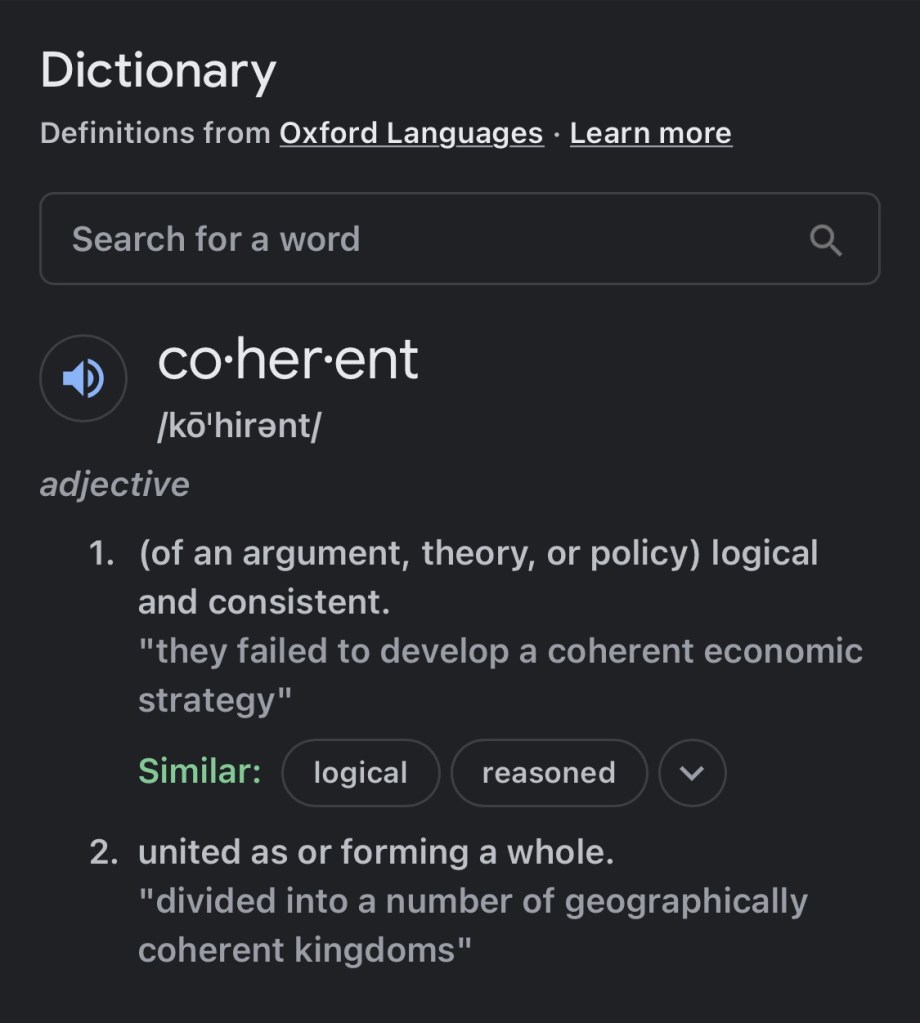
When I consider – from both a clinical and personal perspective – the experience of dissociation, I find myself looking at a lack of cohesiveness as well as association. A complete absence of sense. A veritable word (read: existence) salad.
…
Now that I have made this point, I would like to make a commentary.
I have always had a very existential sort of brain. Since early childhood. Why does that mean that? How do we know either is existing? What really is the difference between you and me?
My first memory of trauma is at 7 years old.
My first explicit memory of depression is at 10 or 11 years old.
My first alcoholic experience was at 13 years old.
My first acutely painful existential crisis (not first existential crisis ) was at 16 years old.
I majored in Philosophy in undergrad and drank the Kool-Aid, drank and ate what Alice drank and ate, took the pill from Morpheus and swallowed it with zero hesitation and complete trust.
I consumed copious amounts of LSD and mushrooms and weed during adolescence and early adulthood.
I came into AA dismantled by a complete annihilation from years of trauma and drug and alcohol abuse. I was down for the count.
I experienced trauma during sobriety.
So…….
What’s my point?
Dissociation is bound to happen, eventually.
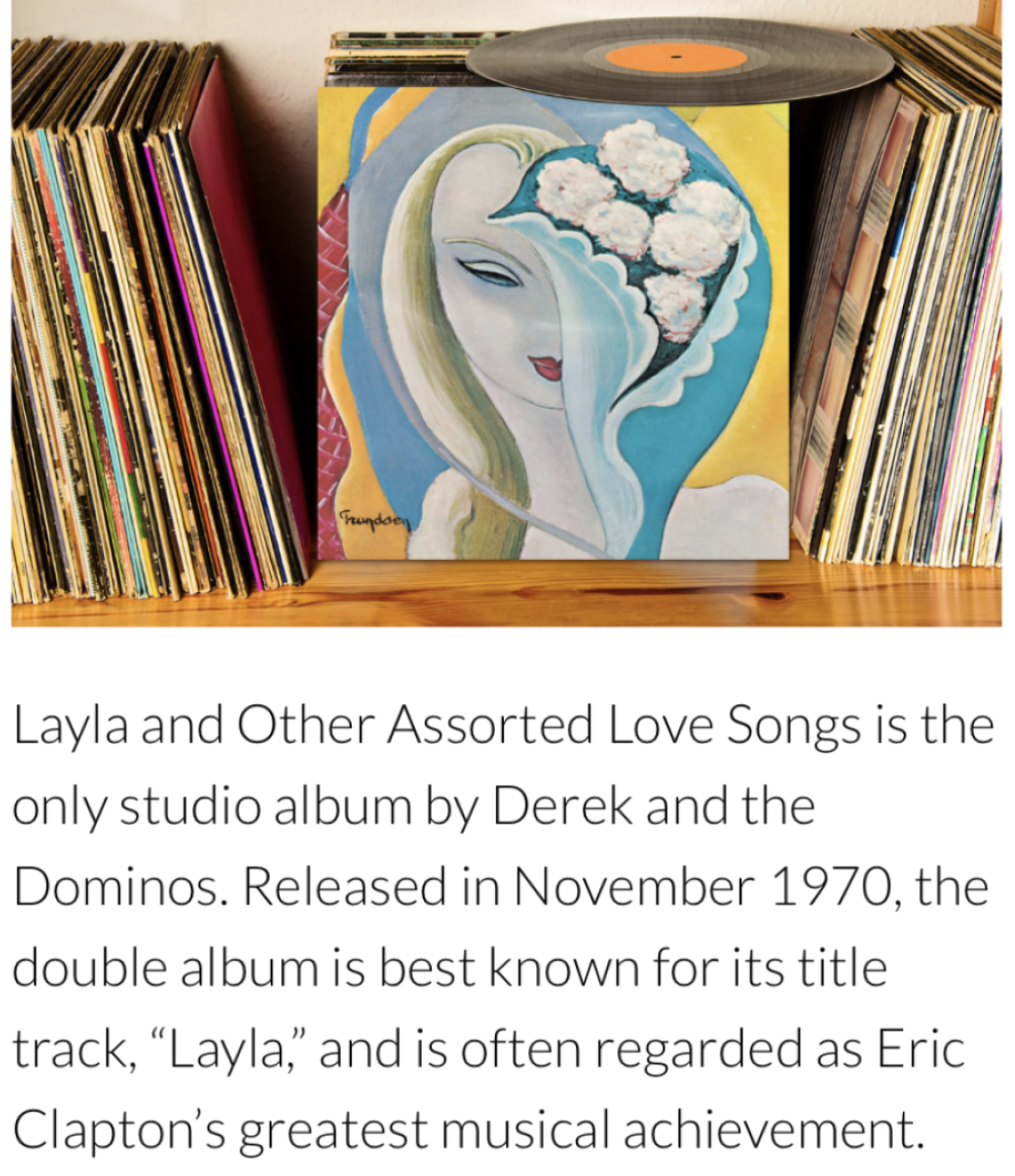
 Looking for Layla: an autobiographical account by Elle B. Hunter, dedicated to Jeff Littner and his “cheerleaders with black and gold hearts”.